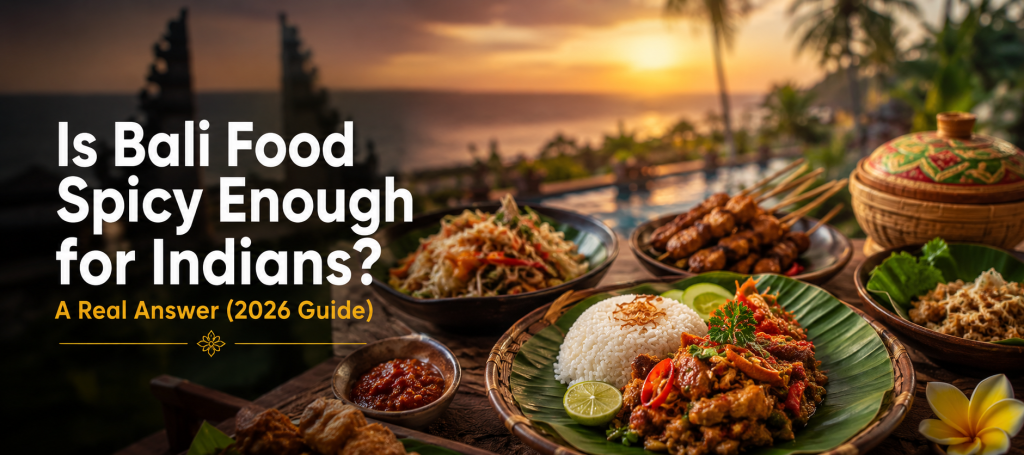
Is Bali Food Spicy Enough for Indians?
If you grew up eating your mom’s chicken curry with three green chillies thrown in “just because,” you’ve probably wondered this before boarding your flight to Bali: is the food even going to have any kick to it?
Short answer: no, not really. Not in the way you’re used to.
Balinese food uses chillies, sure. Sambal shows up on almost every table. But the heat works differently here. It’s sharper and more immediate rather than the slow-building, layered spice you get from a proper Indian masala. Most Indian travellers land in Bali expecting either “too spicy” or “not spicy at all,” and honestly, the real answer sits somewhere in between, depending entirely on what you order.
This guide breaks down exactly what to expect, which Balinese dishes actually pack heat, which ones are mild enough for a toddler, and what to do on the days you just want dal and rice instead of chasing sambal around your plate.
What Does Traditional Balinese Food Taste Like?
Balinese food isn’t built around one dominant spice profile the way Indian regional cuisines are. There’s no single “gravy base” you’ll find in every dish, unlike, say, an onion-tomato masala that shows up in half of North Indian cooking.
Instead, Balinese cooking leans on a spice paste called base genep, made from shallots, garlic, ginger, galangal, turmeric, and candlenut. It’s earthy and aromatic rather than fiery. The heat, when it does show up, comes separately, usually as sambal served on the side.
That’s actually good news for anyone worried about their stomach. You control the spice level yourself, dish by dish, spoon by spoon.
A few things that stand out about Balinese food:
- Coconut milk shows up often, giving dishes a creamy, slightly sweet base
- Sweet soy sauce (kecap manis) is used generously, especially in grilled meats
- Rice is the anchor of almost every meal, similar to South Indian thalis
- Fresh herbs like lemongrass, kaffir lime leaf, and Thai basil do a lot of the flavour work
- Fermented shrimp paste (terasi) adds a funky depth that some Indians love and others find unusual at first
How Spicy Is Balinese Food Compared to Indian Food?
Here’s where most travel blogs get lazy and just say “it depends.” Let’s actually compare.
Indian spice comes from layering. You’ve got your tempering (tadka), your ground masalas, your fresh green chillies, and sometimes a finishing touch of red chilli powder on top. It builds over the course of the dish, and it’s cooked in.
Balinese spice, on the other hand, is usually added at the end or served separately as sambal. The base dish itself is often mild to medium. So technically, plain Balinese food is milder than a proper Indian curry. But sambal, if you go heavy on it, can hit harder than most Indian chillies because it’s raw, concentrated, and not mellowed by slow cooking.
| Factor | Indian Food | Balinese Food |
| Where heat comes from | Cooked into the dish (masala, tadka) | Added separately (sambal on the side) |
| Type of heat | Slow-building, layered | Sharp, immediate |
| Control over spice level | Limited once cooked | High, you add sambal yourself |
| Base flavour without chilli | Still strongly spiced (cumin, coriander, garam masala) | Mild, more aromatic than spicy |
| Average heat for a “spicy” dish | Consistently hot | Varies a lot by region and cook |
If you’re the type who adds extra chilli to restaurant food back home, you’ll probably find most Balinese main dishes underwhelming without sambal. If you’re someone who orders “mild” at Indian restaurants abroad, you’ll likely find sambal genuinely intense, sometimes more than you bargained for.
Popular Balinese Dishes Indians Should Try
Not everything needs to be approached with caution. Some Balinese dishes are genuinely easy for an Indian palate to enjoy, spice level aside.
Nasi Goreng – Fried rice with a sweet-savoury profile from kecap manis. Comfort food, honestly, and rarely too spicy unless you ask for extra sambal.
Sate Lilit – Minced meat (usually chicken or fish) mixed with coconut and spices, wrapped around lemongrass skewers and grilled. Aromatic, not fiery.
Lawar – A mix of vegetables, coconut, and minced meat, sometimes with blood in the traditional version (ask before ordering if this matters to you). This one can genuinely be spicy since sambal is often mixed straight in rather than served separately.
Betutu – Slow-cooked chicken or duck wrapped in banana leaves. Deep flavour, moderate heat, closer to a Sunday roast than a fiery curry.
Gado-Gado – A vegetable salad with peanut sauce. Mild, filling, and a safe bet if you’re easing into local food for the first time.
Babi Guling – Bali’s famous roast suckling pig. Not relevant if you’re vegetarian, obviously, but worth knowing it exists since it comes up in every “must-try Bali food” list.
Which Balinese Foods Are Mild?
If your stomach isn’t up for experimenting, or you’re travelling with kids or elderly parents, here’s a quick cheat sheet.
| Dish | Spice Level | Good For |
| Gado-Gado | Mild | Vegetarians, kids, first-timers |
| Nasi Campur (ask for less sambal) | Mild to Medium | Sampling multiple dishes at once |
| Sate Lilit | Mild | Non-veg eaters who want flavour without heat |
| Bubur Ayam (rice porridge) | Very Mild | Breakfast, upset stomachs |
| Tahu Tempe Goreng (fried tofu and tempeh) | Mild | Vegetarians and vegans |
| Es Campur (dessert) | None | Cooling down after a spicy meal |
A useful trick, and this took us a few trips to figure out: always ask for sambal “on the side” (terpisah, if you want to try the local word). It’s the single easiest way to control heat without missing out on flavour.
Tips for Indians Ordering Food in Bali
A few practical habits that make a real difference once you’re actually sitting at a table:
- Say “tidak pedas” (not spicy) if you want your dish plain, or “sedikit pedas” for just a little heat
- Sambal comes in different types (sambal matah, sambal terasi, sambal bawang), and they’re not equally spicy, so ask before dumping it on everything
- Warungs (small local eateries) are usually spicier than tourist-facing restaurants, which tend to tone things down
- Coconut water or a lassi-style drink helps more than plain water if something turns out hotter than expected
- If you’re travelling with kids, stick to nasi goreng or fried noodles (mie goreng) and skip anything with sambal mixed in
That said, some days you just don’t want to negotiate spice levels at all. You want dal, roti, and something that tastes like home. That’s completely normal, and it’s a big part of why Indian restaurants have grown so much across Bali over the last few years.
Where to Find Authentic Indian Food in Bali
Between the sambal experiments and the coconut-heavy curries, most Indian travellers end up craving actual Indian food at some point during a Bali trip, usually by day three or four.
Seminyak and Canggu have become the main hubs for this, largely because of the growing number of long-stay Indian expats and the steady flow of Indian tourists. You’ll find everything from casual thalis to full North and South Indian menus with proper tandoors on site.
Chai’Ba, with locations in both Seminyak and Canggu, is one option worth knowing about if you’re in either area. The Seminyak spot runs the full North and South Indian menu, tandoori kebabs, curries, dosas, biryani, the works. The Canggu location does the same classic menu but also runs a dedicated plant-based section for vegan travellers, which isn’t something you’ll find at most Indian restaurants on the island. Useful if you’re travelling with a mixed group where someone eats meat and someone else doesn’t.
If you’re staying elsewhere on the island, Ubud and Kuta also have a decent spread of Indian restaurants, mostly clustered around areas with higher Indian tourist footfall.
Conclusion
So, is Bali food spicy enough for Indians? Mostly, no, not on its own. The base dishes lean mild and aromatic rather than fiery, and the real heat comes from sambal, which you control at the table. That’s actually a decent system once you get used to it, since it means you’re never stuck with a dish that’s hotter than you can handle.
That said, there will be days when you just want something that tastes like home, and that’s fair enough. Between Seminyak and Canggu, Indian food in Bali has come a long way, and restaurants like Chai’Ba make it easy to switch between exploring local flavours and going back to familiar comfort food whenever you need it.
Is Balinese food generally spicy? Not by default. The base dishes are usually mild to medium, with heat added separately through sambal, which you can control yourself.
Can I ask for less spicy food in Bali? Yes. Most restaurants, especially tourist-facing ones, are used to this request. Just say “tidak pedas” or ask for sambal on the side.
What is sambal? A chilli-based condiment served alongside most Balinese meals. It varies in heat depending on the type, and it’s usually the main source of spice in a dish.
Is Nasi Goreng spicy? Usually not, unless you specifically ask for extra sambal mixed in. It’s one of the safer options for someone easing into local food.
Do Balinese restaurants understand Indian spice preferences? Tourist areas like Seminyak, Canggu, and Kuta are generally well set up for this, given the large number of Indian visitors over the past several years.
Is it easy to find vegetarian food in Bali? Yes, though it takes a bit of asking. Tofu and tempeh dishes are common, and most restaurants can adjust meals on request. Indian restaurants remain the easiest option for strict vegetarians.
What should I eat if my stomach can’t handle spice at all? Bubur ayam (rice porridge), gado-gado, and plain nasi goreng without sambal are all safe, low-heat choices.
Are warungs spicier than restaurants? Often yes. Local warungs cook for local tastes, so dishes there can run hotter than what you’d get at a restaurant catering mainly to tourists.
Is Indian food easily available in Bali? Yes. Seminyak and Canggu in particular have several established Indian restaurants covering North Indian, South Indian, and vegan menus.
Can I get authentic Indian spice levels at Indian restaurants in Bali? Most Indian restaurants in tourist areas adjust their spice levels to suit international palates, but places with Indian chefs, like Chai’Ba, tend to stay closer to authentic heat levels on request.
Is Bali food safe for kids with low spice tolerance? Yes, if you stick to dishes like nasi goreng, mie goreng, or bubur ayam and skip anything served with sambal mixed in.
What Balinese dish has the most heat? Lawar tends to run hottest among common dishes, since sambal is often mixed directly into it rather than offered separately.
🐦 Kicau Mania
Nikmati suara burung terbaik setiap hari! Rawat, latih, dan cintai burung kicauanmu.